Dubai homes blend luxury with smart design. A well-chosen home elevator adds comfort, safety and value. This guide helps you pick a model that fits your villa or townhouse and your budget with Dubai-specific insights.
- This Dubai-focused guide helps you compare space, drive type and costs.
- You’ll see how floor count and finish shape price and timing.
- Rona Elevators provides Dubai-ready solutions with permit handling, smart controls and quick installation.
- A practical cost checklist and real-world use cases help you choose confidently.
- Examples show setups for UAE villas and tight spaces.
Understanding your space and needs (space-driven decision)
Start with the basics to narrow options fast. Assess how many floors you need to reach, existing shaft access, and the interior fit you want. This keeps your choices aligned with space and budget.
Scope and setup Consider floor count (2–3 stories vs. 4+ stories), available shaft space, and whether you need a machine room. Decide if the installation will be indoors or outdoors to match your decor. Think about who uses the lift daily elderly residents, mobility-impaired family members, or the need to move groceries or equipment between floors.
- Floor to floor height
- Corner versus central placement
- Interior cabin size options and finish choices
Note: Dubai homes benefit from compact designs that fit tight shafts. Rona Elevators can tailor layouts for villa aesthetics Dubai-ready options while keeping permit workflows smooth.
Elevator drive systems explained (types for Dubai homes)
Here are concise definitions to compare options quickly. A drive system is the heart of the lift, influencing space needs, cost and maintenance.
Hydraulic: Uses a piston to raise the cabin. Pros: smooth ride and strong lifting power. Cons: Requires machine-room equipment and higher initial cost usually takes more space.
Pneumatic (vacuum): A compact, tube-like shaft with a vacuum lift. Pros: small footprint, often no machine room.
Cons: Limited speed and passenger capacity; price can vary with cabin finish.
Traction: Uses ropes and a counterweight for efficient movement. Pros: energy efficient, smaller machine room footprint.
Cons: Can be more complex to install in tight spaces.
Dubai considerations include noise, energy use and whether a dedicated machine room is needed. For tight shafts and modern villa aesthetics, pneumatic or compact traction setups often fit best.
Visual guide: Pros/cons above help you compare quickly.
How to choose by floors and space (space-conscious options)
Match the lift to your floor plan. Here are three typical setups and suitable drives.
Small Dubai townhouse 2–3 people, pneumatic lift, compact footprint, often no machine room.
3-story villa Hydraulic or vacuum with an optimized cabin and premium finishes.
Luxury multi-story villa Glass or panoramic cabin, premium finishes and optional battery backup for outages.
Decision prompts to guide selection:
- Do you need a machine room?
- Is battery backup important for power outages?
- What ceiling height and doorway widths are fixed?
Outcome: Pick a setup that balances space, looks and reliability.
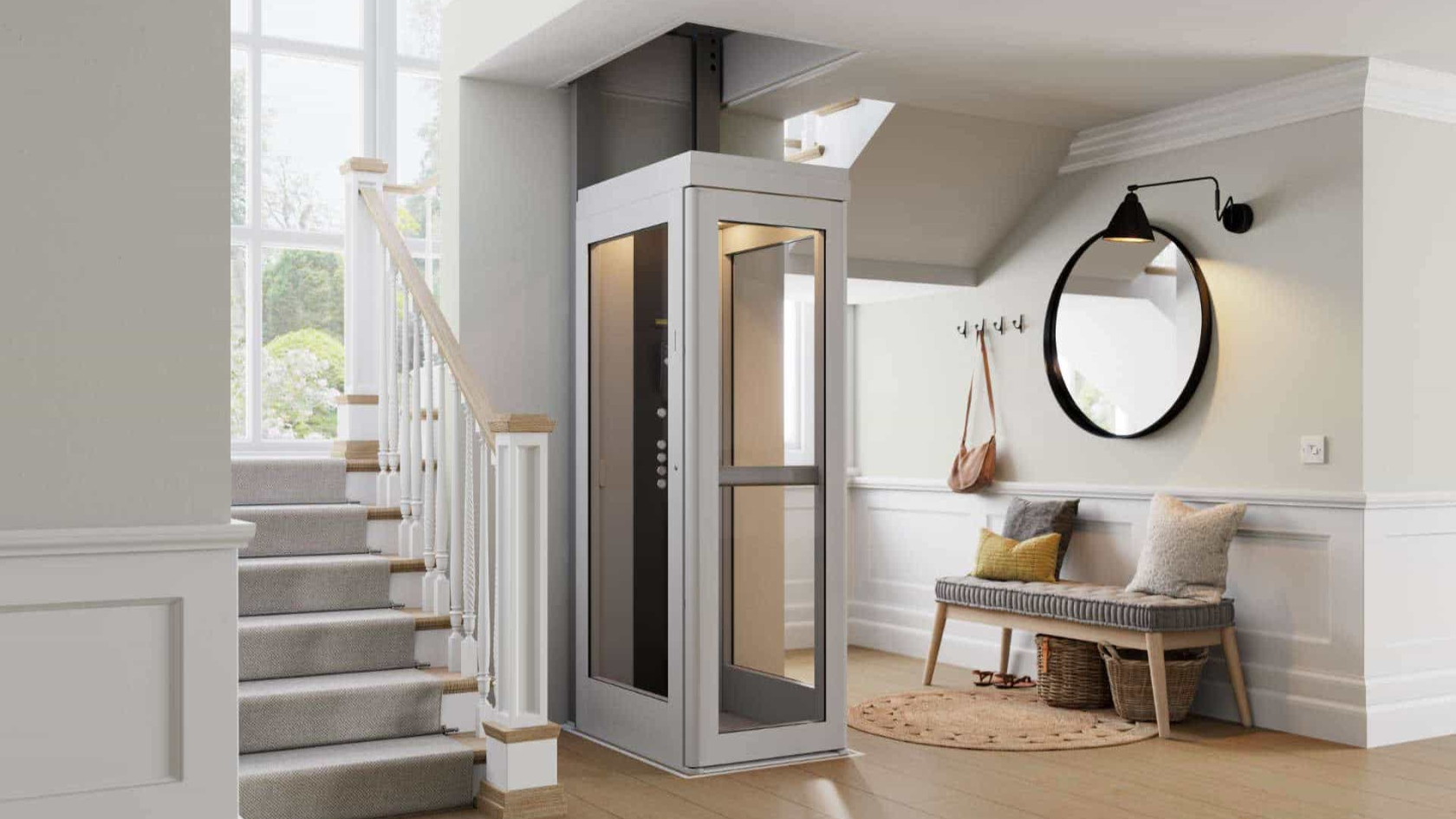
For example: A compact pneumatic lift often fits tight Dubai shafts, while a glass-cabin hydraulic unit elevates luxury living.
Costs and budgeting in the Dubai market (clear cost guide)
Dubai costs vary by drive system, floors, finishes, and installation scope.
- Small home lifts: AED 70,000–120,000
- Standard residential lifts: AED 94,505–180,200
- Luxury/custom lifts: AED 300,000+
- Installation/add-ons: AED 20,000–50,000
- Annual maintenance: AED 3,000–5,000
Smart features and remote monitoring can add value. A market reference: Nibav air-driven lifts start around AED 94,550, illustrating the mid-range benchmark. A quick estimate is base price plus installation, VAT, permits and first-year maintenance.
Dubai-specific safety, compliance, and permits
Safety and permits are essential and often coordinated by the installer. Local codes shape design and approval timelines.
Dubai Municipality safety requirements guide inspections and installation. The EN81 family covers safety standards, with local adaptations. Your installer should handle permits and inspections, and premium models offer battery backup, and emergency stops as standard.
- Confirm permits are managed by your supplier
- Ensure emergency power and overload protections are included
- Check accessibility features for elderly users
Features that matter in a Dubai villa (benefits and differentiators)
Smart controls, safety and aesthetics drive choice. Look for seamless app control, strong safety systems and durable finishes that resist heat and dust in desert climates.
- Smart features: App control, touch panels and optional voice commands
- Safety: Emergency stop, overload protection, door interlocks
- Durability: Quiet operation, low-maintenance drives, solid warranties
- Aesthetics: Cabin finishes, glass/panoramic cabins, decor-matching options
- Reliability: Fast installation timelines (2–4 weeks) strong local service, ISO-certified operations
Rona Elevators offers Dubai ready customization and permit handling to streamline the build process for villas and townhomes. Rona Elevators supports fast, compliant deployments.
Real-life examples and use cases in Dubai
Three typical Dubai scenarios show how space, drive type and finishes come together.
- Compact pneumatic lift in a 2–3-person townhouse no dedicated machine room; simple, space-saving design.
- Luxury 3-story villa with a glass-cabin hydraulic elevator, battery backup, premium finishes, and fast commissioning.
- Smart home lift with app and voice control for an elderly resident in a multi-level villa; emphasis on accessibility and safety.
Each case notes space constraints, drive type, finishes, timeline and maintenance expectations, illustrating how Dubai-specific factors shape outcomes.
Why choose Rona Elevators in Dubai (brand-focused)
Rona Elevators delivers Dubai ready, end-to-end solutions for vertical mobility. The team emphasizes safety, aesthetics and local permitting know-how.
- Customization to fit villa layouts and aesthetics
- Battery backup and robust emergency features
- Local permit handling, inspections, and ISO-certified operations
- Smart controls and user-friendly interfaces through apps
- Dubai installations: Over 300 projects with planning to commissioning
What you get when you choose Rona Elevators: Dubai-ready designs, 2–4-week installations, and comprehensive aftercare.
Comparisons and what to watch for (neutral, non-promotional)
Evaluate options with a clear lens. Compare drive systems, space needs, and local costs and timelines.
- Drive: Hydraulic vs pneumatic vs traction
- Space: Machine room presence, shaft size, cabin size
- Costs: Dubai-specific permits, service coverage, local parts
Rona Elevators scores on Dubai-focused customization, turnkey permit handling, safety emphasis, and long-term maintenance support. This makes choosing a Dubai partner easier.
Frequently Asked Questions
How much does a home elevator cost in Dubai/UAE?
AED 70,000–180,000 for lifts, plus installation and first-year maintenance.
Which is the cheapest home elevator price in Dubai?
Entry-level options start around AED 70,000–95,000, depending on features.
What factors affect home elevator Dubai cost?
Floors, drive system, cabin size, machine room needs, installation complexity and permits.
What types of home elevators are best for small spaces in Dubai villas?
Compact pneumatic lifts or small hydraulic units designed for 2–3 people.
Hydraulic vs. pneumatic vs. traction: which is right for my home?
Pneumatic is space-friendly; hydraulic handles heavier loads; traction offers efficiency for larger homes.