
Home elevators for UAE villas can improve accessibility, convenience and the way residents move between floors. It can also become an integrated architectural feature rather than simply a piece of building equipment. However, choosing a villa elevator involves more than selecting a cabin design. Available space, number of floors, structural conditions, shaft dimensions, pit and overhead requirements, capacity, door configuration, interior finishes, power requirements and long-term maintenance all need to be considered. These decisions become particularly important when adding an elevator to an existing villa, where structural and space limitations may already be fixed. This guide answers the key questions villa owners, architects and developers should consider when planning a home elevator in the UAE.
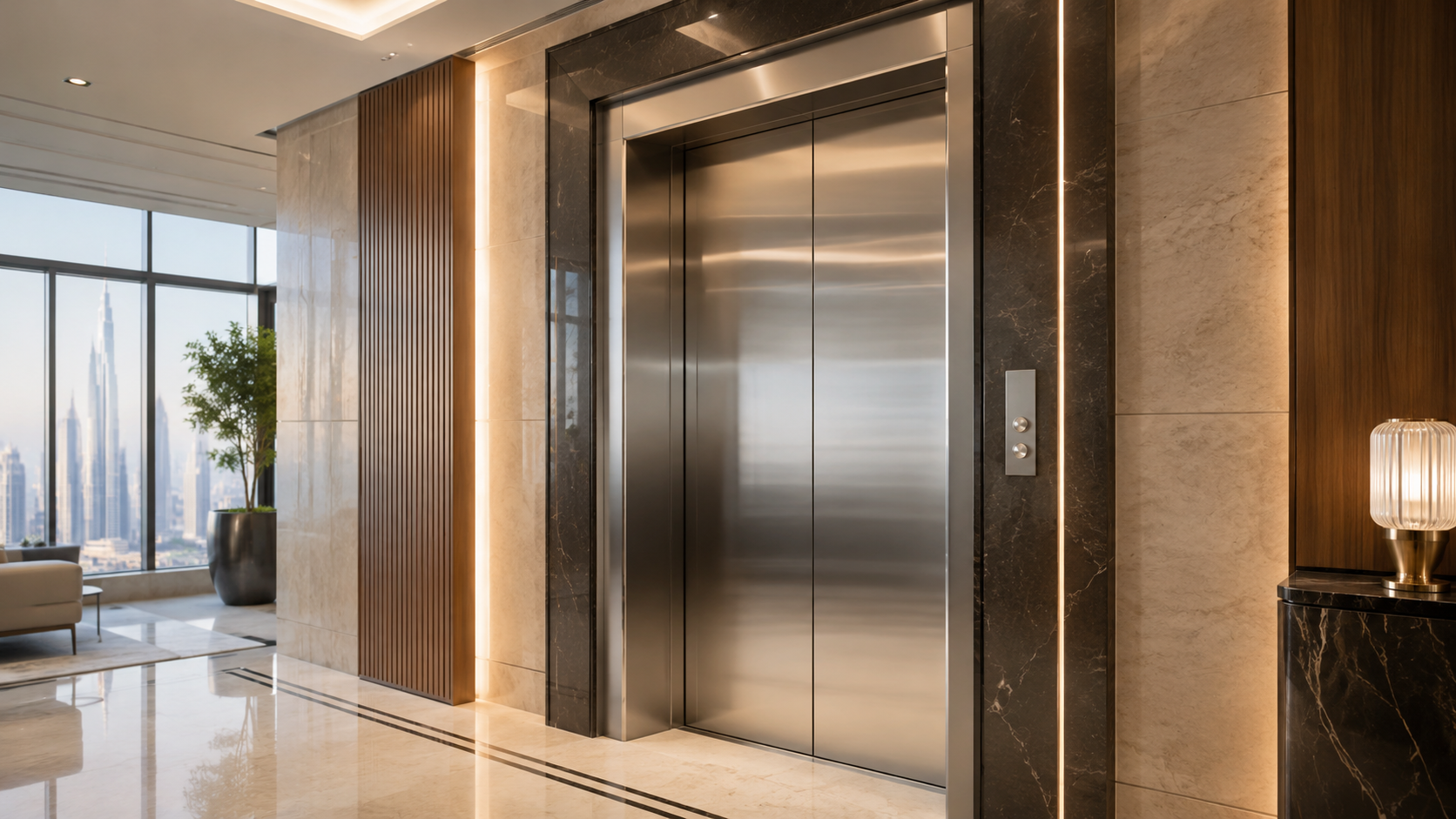
What Is a Home Elevator?
A home elevator is a vertical transportation system designed for private residential use, allowing residents and visitors to travel conveniently between different levels of a villa or house. Unlike elevators designed for high-traffic commercial buildings, residential elevators are selected around the specific requirements of a private property. They may be incorporated into new villas during construction or, subject to technical feasibility, considered for existing homes. In UAE villas, a home elevator may be installed to improve everyday convenience, support accessibility, prepare a property for changing mobility needs or complement the architecture of a premium residence.
Why Choose Home Elevators for UAE Villas?
Villas in the UAE frequently extend across multiple levels. Moving between a basement, ground floor, first floor and rooftop level can become inconvenient, particularly for elderly residents, people with mobility limitations or families carrying luggage, shopping and other items. Home elevators for UAE villas can make movement between these floors considerably easier. It can also help homeowners future-proof a villa. Planning vertical accessibility during construction can reduce the need for more disruptive modifications if residents’ mobility requirements change later. For premium residences, the elevator can additionally form part of the interior design through customised cabin finishes, lighting, doors and architectural detailing.
How Much Space Does a Home Elevator Need?
The space required for a home elevator depends on the elevator technology, capacity, cabin dimensions, door arrangement, travel height and structural configuration. There is no single standard space requirement suitable for every villa. When evaluating available space, designers need to consider more than the usable cabin.
The complete installation may require consideration of:
- Elevator shaft or hoistway dimensions
- Cabin dimensions and rated capacity
- Door width and opening configuration
- Pit requirements
- Overhead or headroom
- Equipment and controller locations
- Landing access
- Structural requirements
For this reason, homeowners should avoid finalising architectural dimensions based only on a cabin size found online. An elevator specialist should review the project before the shaft and surrounding structural elements are finalised.
Where Is the Best Location for an Elevator in a Villa?
The ideal location depends on the villa’s floor plan and how residents are expected to move through the property. For a new-build villa, the elevator can be integrated into the architectural layout from the beginning. Architects can coordinate the shaft, landings, circulation areas and structural requirements with the overall design. Potential locations may include a central circulation core, staircase area or another part of the building that provides convenient access across all required floors. For an existing villa, the available options may be more limited. A technical assessment may be required to identify a location that minimises structural alterations while providing practical access at each landing. The best location is therefore not simply where an elevator physically fits—it should also make sense for everyday circulation through the home.
Can You Install an Elevator in an Existing Villa?
Yes, installing a home elevator in an existing UAE villa may be possible, but feasibility depends on available space, structural conditions, required travel, access and the elevator system selected. Retrofitting generally requires more detailed planning than installation in a new building. A site assessment may examine possible shaft locations, floor openings, structural conditions, pit availability, overhead clearance, landing positions, electrical requirements and access for installation. In some projects, structural or architectural modifications may be required. Homeowners considering a retrofit should therefore obtain a technical assessment before committing to a specific elevator or design concept.
How Many Floors Can a Villa Elevator Serve?
The number of floors a residential elevator can serve depends on the selected elevator system and its technical specifications. For example, a villa may require travel between the basement, ground floor and upper floors, while another property may also need access to a rooftop or terrace level. The appropriate solution should therefore be determined according to total travel height and number of stops, rather than assuming that every home elevator supports the same configuration. This should be established early because travel height can influence elevator technology, shaft requirements, speed and other design considerations.
What Capacity Should a Home Elevator Have?
The appropriate capacity depends on how the elevator will be used. A villa owner should consider the expected number of passengers, accessibility requirements, available space and whether the elevator may need to accommodate items such as luggage, a wheelchair or household goods. Choosing capacity should therefore involve balancing usability against the available architectural space. If wheelchair accessibility is required, this should be communicated during the initial planning stage because cabin and door dimensions can affect the complete elevator layout.
Do Home Elevators Need a Pit?
Whether a home elevator requires a pit—and how deep that pit must be—depends on the elevator system and technical configuration. Some residential elevator solutions may have different pit requirements from conventional passenger elevator systems. For new villas, incorporating the required pit during structural design is generally easier than making changes after construction. For existing properties, available floor depth and structural conditions may influence which elevator configurations can be considered. Never assume that a home elevator is “pitless” or requires a specific pit depth without checking the technical specification of the selected system.
How Much Headroom Does a Villa Elevator Need?
Headroom, sometimes referred to as overhead space, is another important design consideration. The required clearance above the highest landing depends on the elevator configuration and equipment. This can become particularly important in villas where the elevator travels to the uppermost floor beneath a roof slab or where architectural ceiling heights have already been fixed. Architects should therefore coordinate elevator overhead requirements before structural and roof designs are finalised.
Which Type of Elevator Is Best for a Villa?
The best elevator for a UAE villa depends on the number of floors, available shaft space, required capacity, travel height, accessibility needs, architectural design and maintenance requirements. Different residential elevator technologies can offer different advantages depending on the project. Instead of selecting a system solely because it is marketed as a “home lift,” homeowners should compare its technical requirements with the actual building conditions. An elevator specialist can assess these variables and recommend an appropriate solution for the property.
Can a Home Elevator Match the Villa’s Interior Design?
Yes. For many UAE villas, elevator design is an important part of the overall architectural concept. Depending on the selected system and available options, cabin interiors can incorporate different wall finishes, flooring, lighting, ceilings, mirrors, operating panels and door finishes. For contemporary and luxury villas, homeowners may prefer minimalist finishes that integrate with surrounding interiors. Other properties may call for more decorative materials or a panoramic elevator design. The objective should be to create an elevator that feels integrated with the residence rather than added to it as an afterthought.
What Is a Panoramic Home Elevator?
A panoramic elevator uses glazed elements to provide views from the cabin or shaft, depending on its configuration. In villas, panoramic designs can turn the elevator into an architectural feature and may work particularly well around open staircases, atriums or other visually prominent spaces. However, panoramic elevators still require appropriate technical planning. Structural integration, glazing, shaft design, maintenance access, privacy and the surrounding architecture should all be considered.
Should You Plan a Home Elevator During Villa Design?
Yes. For a new UAE villa, the best time to plan home elevators for UAE villas is during the architectural and structural design stages. Early planning allows architects, structural engineers, MEP consultants and elevator specialists to coordinate important requirements before construction progresses. These can include the shaft, pit, overhead, landing openings, electrical provisions and equipment locations. Late elevator selection can potentially lead to redesign, structural modifications or compromises in cabin size and location. For developers and villa owners who already know that an elevator will be required, early technical coordination can therefore make the installation process considerably more efficient.
What Should Architects Consider When Designing a Villa Around an Elevator?
Elevator planning should be coordinated with the architecture rather than treated as an isolated specialist package. The design team should consider shaft dimensions, structural loads and openings, landing positions, pit and overhead requirements, electrical requirements, access for installation and maintenance, door orientation and interior finishes. Architects should also consider how passengers approach and leave the elevator. A technically suitable elevator can still feel inconvenient if its landing position does not work naturally with the villa’s circulation.
Are Home Elevators Safe?
A properly designed, installed and maintained residential elevator should incorporate safety features appropriate to its elevator type and applicable requirements. Specific safety provisions depend on the equipment and project, but may include emergency communication or alarm functions, door safety systems, emergency lighting, backup or rescue functions and other protective features. Villa owners should evaluate safety as part of the complete elevator specification rather than focusing only on cabin appearance or price. Installation, testing, commissioning and ongoing maintenance are also important elements of long-term safe operation.
What Are the Maintenance Requirements for a Villa Elevator?
Like other mechanical and electrical equipment, a home elevator requires regular maintenance. Preventive maintenance can help identify wear, adjustment requirements and potential problems before they develop into more significant faults. When comparing home elevator companies in the UAE, homeowners should therefore ask about long-term support, maintenance arrangements, technician availability and spare-parts support in addition to the initial installation cost. A visually impressive elevator is of limited value if appropriate technical support is difficult to obtain later.
How Much Does a Home Elevator Cost in the UAE?
The cost of a home elevator in the UAE varies according to the elevator type, number of floors, travel height, capacity, shaft requirements, door configuration, finishes, customisation and installation conditions. For existing villas, structural or architectural modifications can also affect the overall project cost. This makes generic online prices difficult to apply accurately to an individual property. A more useful approach is to provide the elevator company with architectural drawings or arrange a site assessment so that the technical requirements can be established before a quotation is prepared.
What Information Should You Give an Elevator Company?
Providing clear project information can make the selection and quotation process much more efficient. Ideally, villa owners, consultants or architects should provide the number of floors and stops, floor-to-floor heights, architectural drawings, available shaft dimensions, expected capacity, preferred door configuration, accessibility requirements, project status and desired interior design. For an existing villa, photographs and a site inspection may also be useful, although these do not replace the technical assessment where one is required.
How to Choose a Home Elevator Company in the UAE
When selecting a home elevator company in the UAE, do not make the decision based only on the lowest initial quotation. Consider the company’s ability to understand architectural drawings, evaluate technical constraints, recommend suitable equipment, coordinate with consultants and contractors, execute the installation and provide maintenance after handover. For bespoke or luxury villas, coordination capabilities can be particularly important because elevator works may interact with structural, MEP and interior-design packages.
Home Elevator Solutions from RONA Elevators & Escalators L.L.C.
RONA Elevators & Escalators L.L.C. specialises in home elevators for UAE villas and provides residential and home elevator solutions for villas in the UAE, supporting projects with different architectural, space and mobility requirements. The selection process should begin by understanding the property rather than choosing equipment from appearance alone. Building layout, number of stops, travel height, available space, capacity, accessibility requirements and design expectations can then be evaluated to identify an appropriate solution. For new villas, early coordination can help integrate elevator requirements into the architectural and structural design. For existing villas, a technical assessment can help establish whether an elevator can be incorporated and what modifications may be necessary. Planning a home elevator for a new or existing UAE villa? Contact RONA Elevators & Escalators L.L.C. to discuss your drawings, space requirements and preferred design and identify a suitable residential elevator solution.
Frequently Asked Questions About Home Elevators in UAE Villas
How much space do I need for a home elevator in a UAE villa?
There is no universal space requirement. The required area depends on the elevator type, cabin capacity, door configuration, shaft design, pit, overhead and other technical requirements. An elevator specialist should review the available space before architectural dimensions are finalised.
Can a home elevator be installed without a machine room?
Some residential elevator configurations may not require a conventional separate machine room. Suitability depends on the elevator technology, travel height, building layout and project requirements.
Can I add an elevator to an existing villa in Dubai or elsewhere in the UAE?
It may be possible. Available space, structural conditions, floor openings, pit and overhead requirements, landing access and other technical factors need to be assessed before determining feasibility.
What is the best home elevator for a three-storey villa?
There is no single best model for every three-storey villa. The appropriate elevator depends on travel height, number of stops, capacity, available space, accessibility requirements, preferred design and technical constraints.
How long does home elevator installation take?
Installation time varies according to the elevator system, number of stops, site readiness, civil works, project coordination, testing and other site-specific factors. A project-specific programme should be established after the technical requirements are confirmed.
Are home elevators suitable for elderly residents?
A home elevator can make movement between floors easier for elderly residents and people with mobility limitations. Where accessibility is a priority, cabin dimensions, door width, controls and other relevant requirements should be incorporated into the specification from the beginning.
Can a villa elevator accommodate a wheelchair?
Depending on the selected system and its dimensions, a residential elevator can be specified around accessibility requirements. If wheelchair access is required, this should be identified early because it can affect cabin dimensions, door openings and shaft requirements.
Does a home elevator increase property value?
A home elevator can add convenience, accessibility and premium functionality to a villa. Its effect on resale value, however, depends on the individual property, market and quality of the installation, so a specific increase in property value should not be assumed.